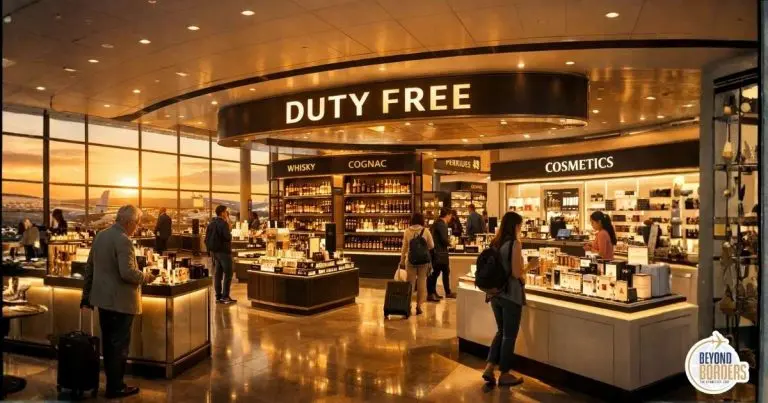


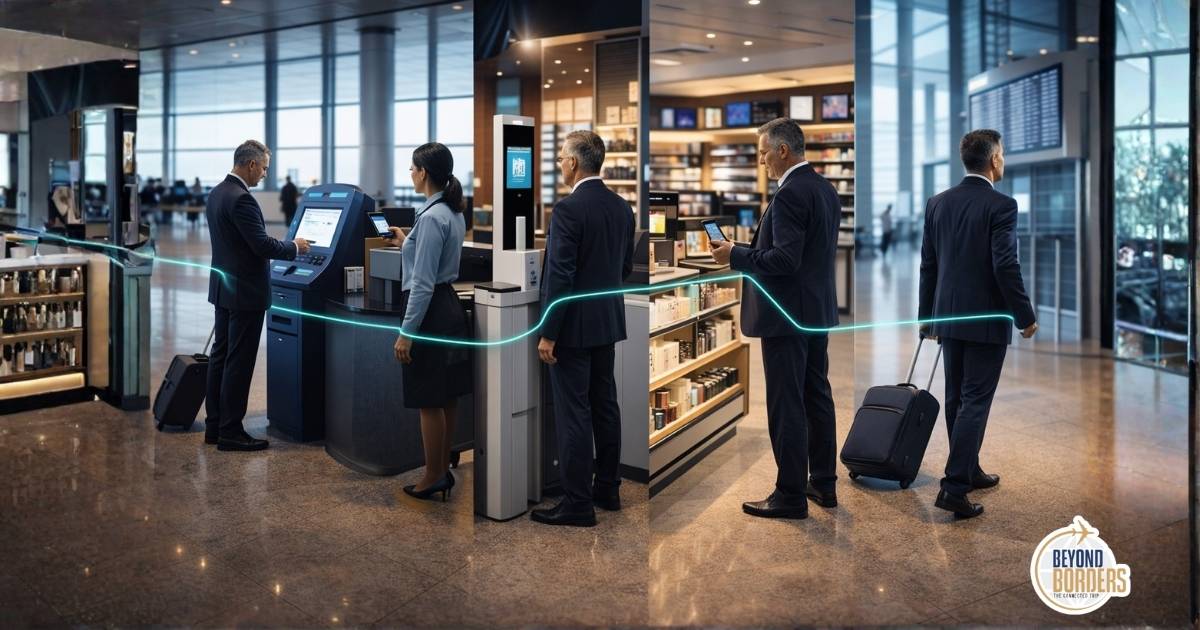
Airport retail has long been measured by tangible markers: expansive duty free halls, premium brand portfolios and high traffic locations. While these remain important, the true runway of competitive advantage in airport retail today is passenger data and how it is captured, connected and activated across airlines, airports and retailers to deliver highly personalised experiences.
Table of Contents
- 1. Why Passenger Data Is the New Runway for Airport Retail
- 2. Who Owns What Data in Airport Retail and Aviation
- 3. AI: Unlocking the Potential of Airport Retail Passenger Data
- How AI Activates Airport Retail Data Across the Journey
- 4. Five Airports Leading the Way with AI in Airport Retail
- 5. Challenges and Opportunities for Holistic Airport Retail Data Integration
- 1. System Integration Complexity in Airport Retail
- 2. Investment and Commercial Models
- 3. Data Privacy and Governance in Airport Retail
- 4. Data Standardisation and Quality
- 5. Real Time Activation for Airport Retail
- 6. The ROI of Integrated AI and Data in Airport Retail
- 7. Actionable Steps for Airport Retail Operators and Airlines
- Step 1: Build Unified Data Platforms
- Step 2: Leverage AI Analytics
- Step 3: Prioritise Privacy and Consent
- Step 4: Monitor Real Time Signals
- Step 5: Collaborate Across Stakeholders
- 8. Frequently Asked Questions About Airport Retail Data and AIPersonalisation
- What is the competitive advantage in airport retail today?
- What types of data do passengers generate during their airport journey?
- Who owns passenger data in the aviation retail ecosystem?
- What role does AI play in airport retail personalization?
- Which airports are leading the way with AI in airport retail?
- What are the five challenges to holistic data integration in airport retail?
- What ROI can airport retail operators expect from AI and data integration?
- What is the future of airport retail according to this article?
- 9. Conclusion: The Future of Airport Retail Belongs to Connected Journeys
- Key References
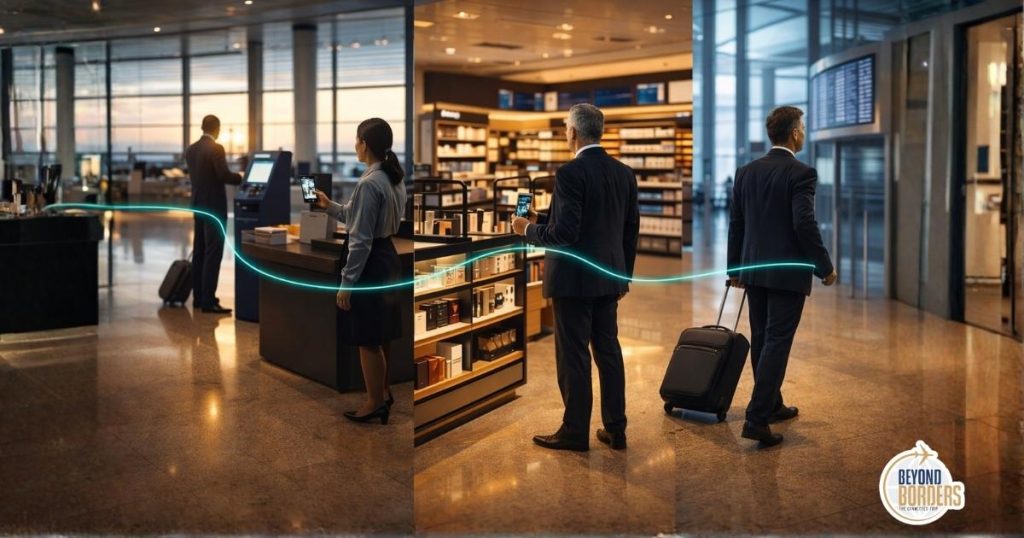
Passengers generate a wealth of data at every stage of their journey: from flight bookings and loyalty programme interactions to app engagement, in terminal movements and retail transactions. Each digital footprint contains valuable insights into preferences, purchase intent and travel behaviour.
When these data points are integrated into a unified view, airports and retailers can anticipate passenger needs, personalise airport retail experiences and drive higher engagement, loyalty and revenue.
The question is no longer who owns data in a transactional sense, but who is able to connect it seamlessly across the journey. This will define leadership in airport retail for the next decade.
1. Why Passenger Data Is the New Runway for Airport Retail
Airport retail has traditionally been evaluated through visible indicators such as large duty free spaces, premium brand offerings and high passenger traffic. The real competitive advantage today lies in effectively using passenger data. The question is not simply who owns the data but who can integrate and connect it smoothly across the entire passenger journey.
That ability to connect data will ultimately determine leadership in airport retail over the next decade. Passengers now generate a continuous stream of digital signals from the moment they book a flight to the moment they exit an arrivals hall. Every interaction is a data point. Every data point is an opportunity to serve the passenger more effectively and to drive higher airport retail revenue.
Related: How AI Is Reshaping Duty Free Retail in India
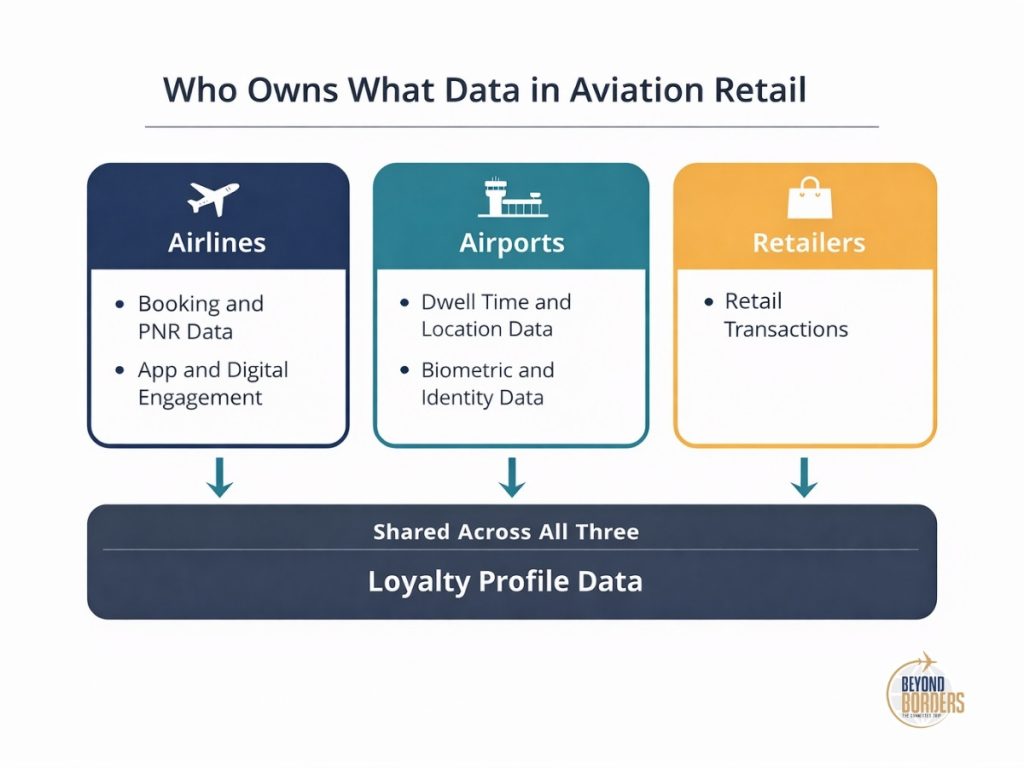
2. Who Owns What Data in Airport Retail and Aviation
The following table maps each data type to its primary owner, its value for airport retail personalisation and the role AI plays in activating it. Understanding this ownership map is the first step toward building the cross stakeholder data partnerships that unlock the full potential of airport retail personalisation.
| Data Type | Primary Owner | Value in Retail Personalisation | Role of AI |
|---|---|---|---|
| Booking and PNR Data | Airlines | Predictive purchase behaviour | Personalisation models |
| App and Digital Engagement | Airlines and Airports | High value journey signals | Real time segmentation |
| Retail Transactions | Retailers | Purchase history | Recommendation engines |
| Loyalty Profile Data | Airlines, Airports and Retailers | Lifetime value insights | Loyalty clustering |
| Dwell Time and Location Data | Airports | Opportunity timing | Predictive retail triggers |
| Biometric and Identity Data | Airports and Airlines | Seamless personalisation | Secure authentication |
Related: State Excise and Pricing Strategy in India Airport Retail
3. AI: Unlocking the Potential of Airport Retail Passenger Data
Artificial intelligence is a key enabler of data driven airport retail. By analysing vast datasets in real time, AI transforms raw data into actionable insights, predictive recommendations and personalised passenger experiences.
AI does not replace human strategy. It amplifies insights from data, enabling stakeholders to deliver predictive, personalised and seamless airport retail experiences. The most effective implementations combine human commercial judgement with AI’s capacity to process and activate data at a scale and speed no human team can match alone.
How AI Activates Airport Retail Data Across the Journey
From booking to boarding, AI can surface the right airport retail offer to the right passenger at the right moment. A passenger identified through their loyalty profile as a frequent premium spirits buyer can receive a targeted offer as they clear security. A passenger with a long connection window can be guided to relevant airport retail and dining options based on their dwell time and location data.
This is not speculative. It is already being deployed across leading airports worldwide and the airports doing it best are pulling ahead commercially. The data advantage in airport retail is compounding: the more data collected and activated, the more refined the personalisation and the higher the conversion.
4. Five Airports Leading the Way with AI in Airport Retail
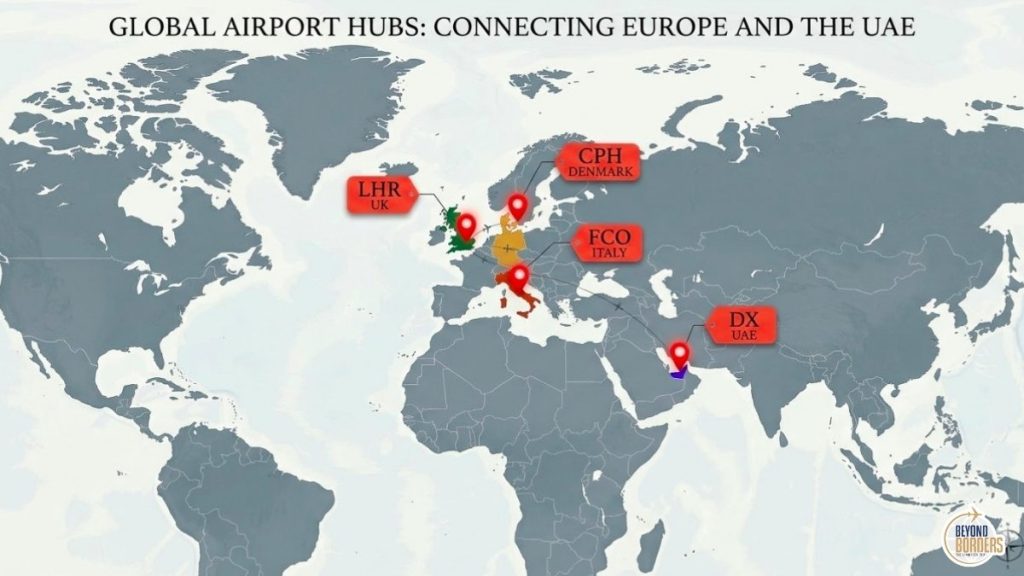
These five airports demonstrate how AI is being deployed across different dimensions of the airport retail and passenger journey experience. Each represents a distinct application of AI that other operators can learn from and adapt.
| Airport | AI Application in Airport Retail |
|---|---|
| Copenhagen Airport (CPH) | Uses AI to predict queue times at security checkpoints allowing smoother passenger flows and more dwell time for airport retail engagement |
| Fiumicino Airport Rome | AI powered visual directories guide passengers to lounges, retail outlets and amenities in real time |
| Dubai International (DXB) | Biometric AI streamlines passport control and boarding, freeing time for passengers to engage with airport retail and services |
| Munich Airport | Conversational AI chatbots provide multilingual support, retail recommendations and wayfinding assistance |
| Heathrow Airport London | Integrates AI into CRM systems to personalise offers across retail, dining, parking and loyalty programmes |
5. Challenges and Opportunities for Holistic Airport Retail Data Integration
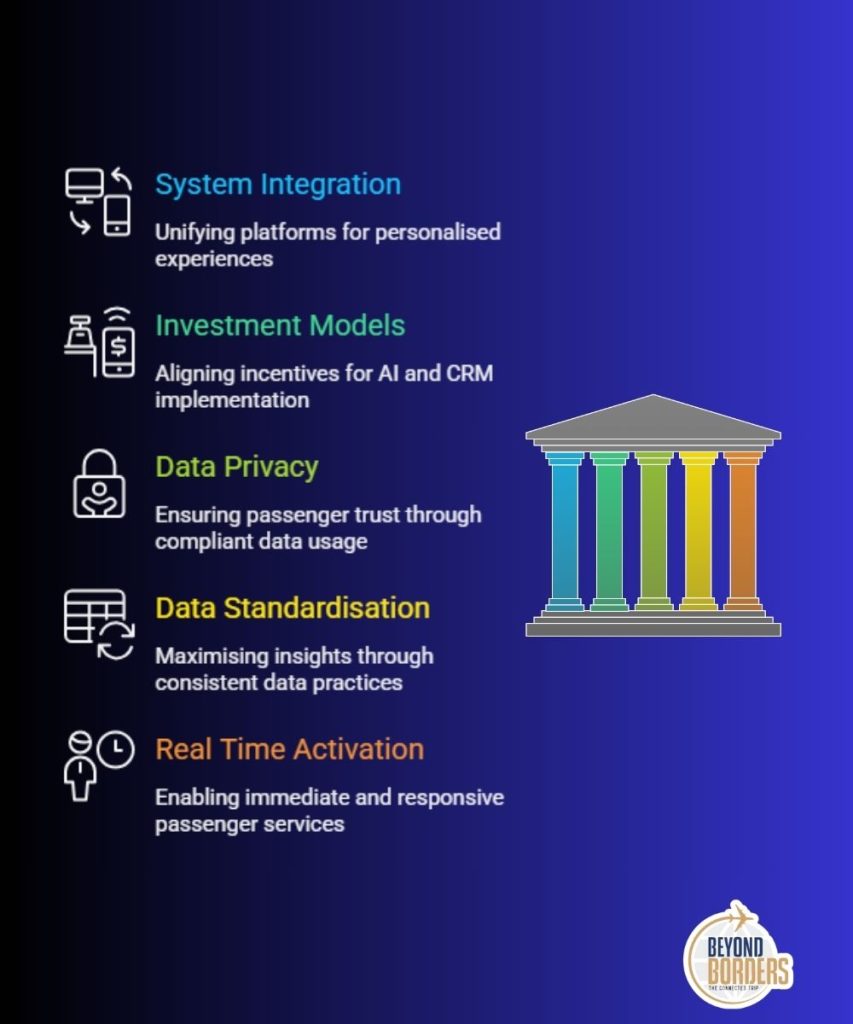
Integrating data across airlines, airports and retailers to deliver seamless airport retail personalization is not without complexity. Five challenges shape the path forward and each carries an equally significant opportunity.
1. System Integration Complexity in Airport Retail
While existing systems were designed for specific operational needs, modern integration and data strategies now make it possible to unify platforms, opening the door to personalised and predictive airport retail passenger experiences.
2. Investment and Commercial Models
Implementing AI and CRM platforms requires thoughtful investment and alignment of incentives across stakeholders. Pilots often demonstrate value quickly, providing the confidence to scale airport retail data programmes across a full network.
3. Data Privacy and Governance in Airport Retail
Passenger data comes with regulatory obligations including GDPR and local laws. Establishing clear consent frameworks and privacy compliant data usage ensures passenger trust while enabling airport retail personalization.
4. Data Standardisation and Quality
Even with access to multiple datasets, differences in format, quality and availability can create challenges. Standardised data practices and collaborative governance can maximise insights and accelerate airport retail personalization at scale.
5. Real Time Activation for Airport Retail
AI enables real time, context aware personalization. From targeted offers to predictive retail recommendations, real time systems turn insight into action and create seamless airport retail passenger experiences.
6. The ROI of Integrated AI and Data in Airport Retail
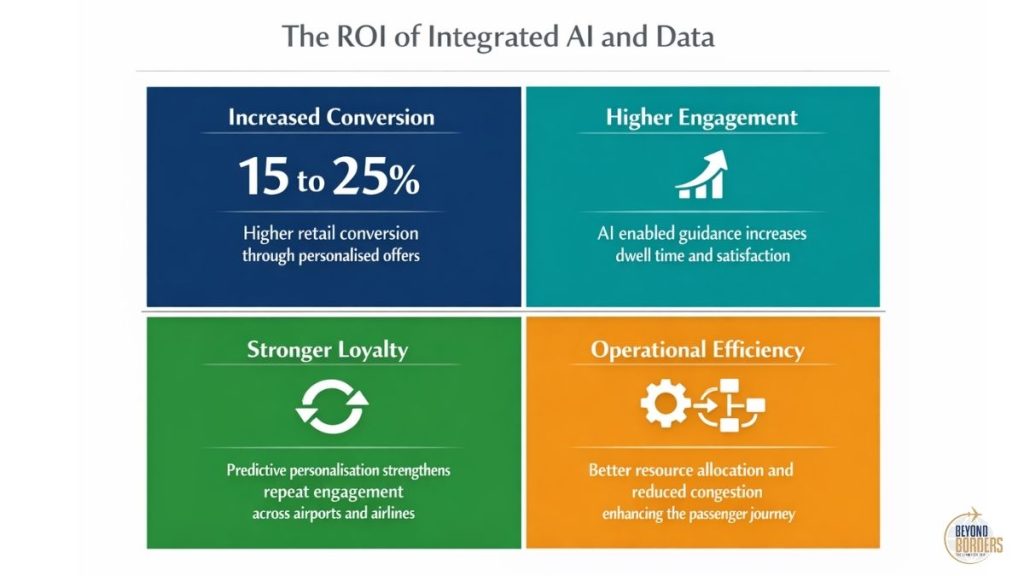
The business case for AI driven data integration in airport retail is clear and quantifiable. Four distinct ROI dimensions demonstrate why the investment case is compelling for airports, airlines and retail operators alike.
| ROI Dimension | Outcome for Airport Retail |
|---|---|
| Increased Conversion | Personalised offers can drive 15 to 25% higher retail conversion in airport retail |
| Higher Engagement | AI enabled passenger guidance and recommendations increase dwell time and satisfaction |
| Stronger Loyalty | Predictive personalisation strengthens repeat engagement across airports and airlines |
| Operational Efficiency | AI supports better resource allocation and reduces congestion, enhancing the passenger journey |
Related: India UK FTA: What It Means for Prices and Airports
7. Actionable Steps for Airport Retail Operators and Airlines
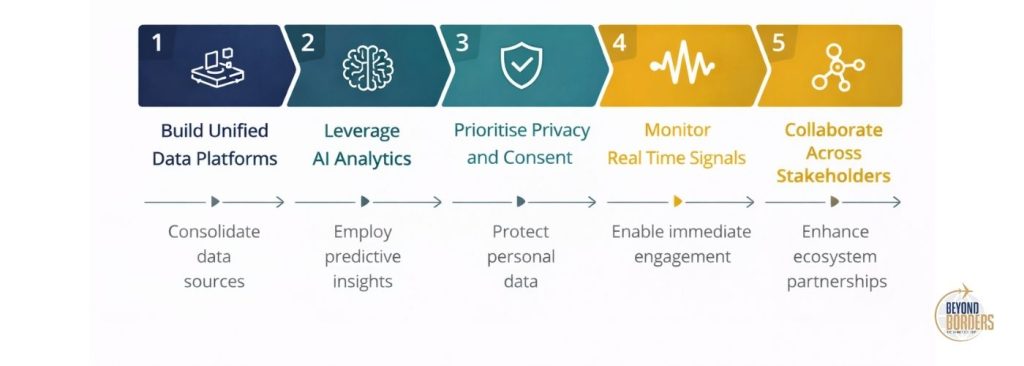
Five practical steps will position airports, airlines and retailers to lead on data driven airport retail personalization over the next decade.
Step 1: Build Unified Data Platforms
Build unified data platforms across airlines, airports and retail to create a single connected view of the passenger journey. This is the foundation of all airport retail personalization capability.
Step 2: Leverage AI Analytics
Leverage AI analytics for predictive personalization and inventory planning. Move from descriptive reporting to predictive airport retail insight that anticipates passenger needs before they arise.
Step 3: Prioritise Privacy and Consent
Prioritise privacy and consent management. Passenger trust is a commercial asset. Clear consent frameworks protect both the passenger and the airport retail operator.
Step 4: Monitor Real Time Signals
Monitor real time signals to adjust airport retail promotions instantly. Static promotional calendars are becoming obsolete. Real time activation is the new standard.
Step 5: Collaborate Across Stakeholders
Collaborate across stakeholders to maximise collective insight. No single party owns the complete passenger picture. The biggest airport retail wins come from genuine data partnerships between airlines, airports and brands.
8. Frequently Asked Questions About Airport Retail Data and AI
Personalisation
What is the competitive advantage in airport retail today?
The real competitive advantage in airport retail today is passenger data and how it is captured, connected and activated across airlines, airports and retailers. While traditional metrics such as duty free floor space and brand portfolios remain relevant, the operators who can integrate and act on passenger data in real time will define airport retail leadership for the next decade.
What types of data do passengers generate during their airport journey?
Passengers generate data at every stage of their airport journey: from flight bookings and loyalty programme interactions to app engagement, in terminal movements and retail transactions. Each digital footprint contains insights into preferences, purchase intent and travel behaviour. When integrated into a unified view these data points allow airports and retailers to anticipate needs and personalise airport retail experiences.
Who owns passenger data in the aviation retail ecosystem?
Booking and PNR data is primarily owned by airlines. Dwell time and location data is owned by airports. Retail transactions belong to retailers. Loyalty profile data is shared across airlines, airports and retailers. AI activates each data type differently: personalization models for booking data, predictive retail triggers for location data and loyalty clustering for shared profile data.
What role does AI play in airport retail personalization?
AI is the key enabler of data driven airport retail. It analyses vast datasets in real time and transforms raw data into actionable insights, predictive recommendations and personalised passenger experiences. AI does not replace human commercial strategy but amplifies it, enabling airport retail stakeholders to deliver predictive and seamless experiences at scale.
Which airports are leading the way with AI in airport retail?
Five airports are at the forefront of AI in airport retail. Copenhagen Airport uses AI to predict security queue times and increase retail dwell time. Rome Fiumicino uses AI powered visual directories. Dubai International uses biometric AI to streamline processing and free passengers for retail engagement. Munich Airport uses conversational AI chatbots for multilingual retail recommendations. Heathrow Airport integrates AI into CRM systems to personalise offers across retail, dining, parking and loyalty.
What are the five challenges to holistic data integration in airport retail?
The five challenges are: system integration complexity where existing platforms were built for siloed operational needs; investment and commercial model alignment across stakeholders; data privacy and governance under GDPR and local regulations; data standardisation and quality differences across datasets; and real time activation where AI must turn insight into action within the passenger’s journey window.
What ROI can airport retail operators expect from AI and data integration?
Four quantified ROI outcomes are identified. Personalised offers can drive 15 to 25% higher airport retail conversion. AI enabled guidance and recommendations increase dwell time and satisfaction. Predictive personalization strengthens repeat engagement across airports and airlines. AI supports better resource allocation and reduces congestion, enhancing the overall passenger journey.
What is the future of airport retail according to this article?
The future of airport retail belongs to those who see passengers as connected journeys rather than isolated transactions. By integrating AI with CRM platforms and data across airlines, airports and retail, stakeholders can deliver highly personalised, seamless and predictive experiences. The runway of airport retail is no longer measured in square meters or brand presence but in connected and actionable passenger data.
9. Conclusion: The Future of Airport Retail Belongs to Connected Journeys
The runway of airport retail is no longer measured in square meters or brand presence. It is measured in connected and actionable passenger data. By integrating AI with CRM platforms and data across airlines, airports and retail, stakeholders can deliver highly personalised, seamless and predictive experiences.
The future of aviation retail belongs to those who see passengers as connected journeys and not isolated transactions, and who use data and AI to transform every touch point into a meaningful interaction. Airport retail operators who invest now in the data infrastructure, AI capability and cross stakeholder partnerships that make this possible will define the next decade of the industry.
Key References
- Heathrow AI passenger experience
- Copenhagen AI passenger flow
- Fiumicino AI visual directory
- Dubai Airport AI integration
- Munich AI chatbots and personalisation
Disclaimer: The analysis, opinions and projections expressed in this article are based on publicly available information and research. They are not intended as professional, legal or policy advice.