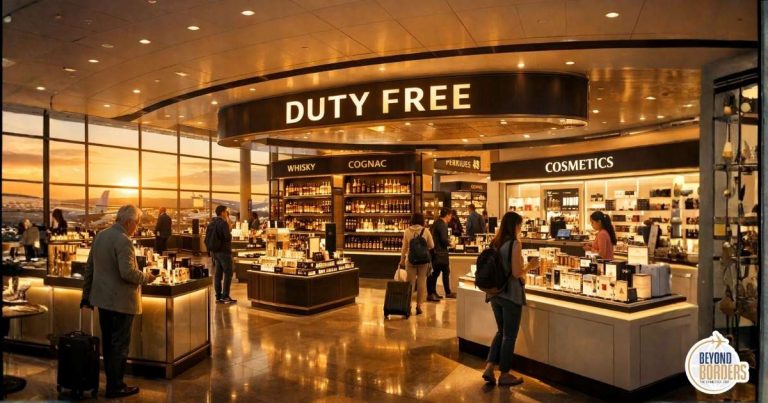


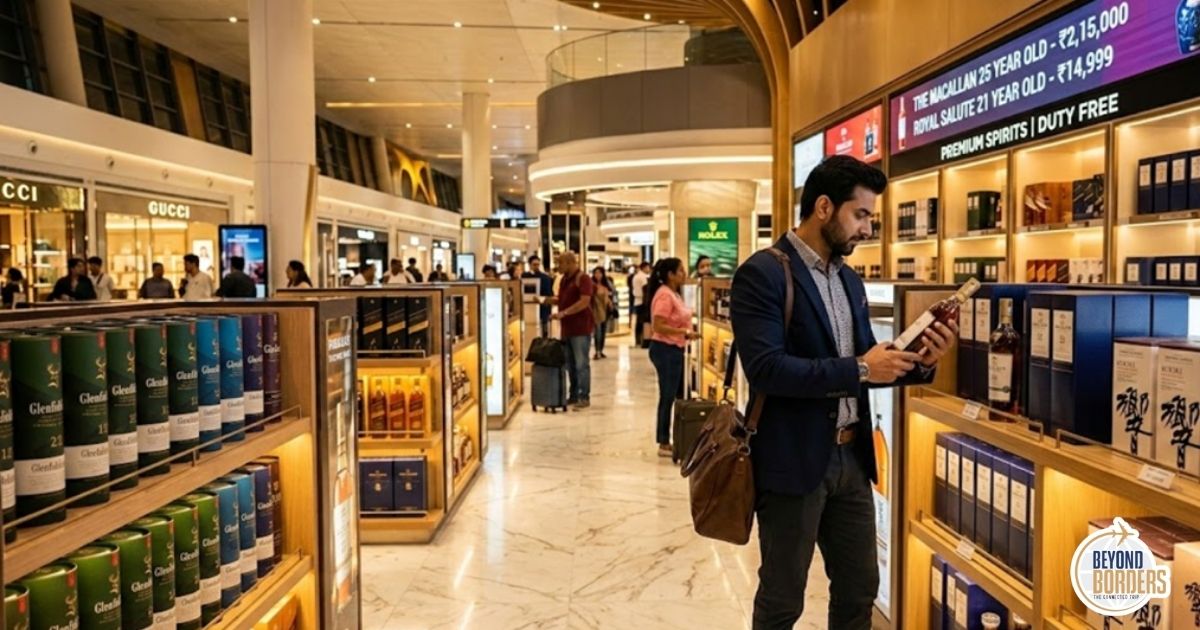
India duty free allowance 2026 just received its most significant upgrade in nearly a decade. Under the new Baggage Rules 2026, Indian residents returning from international travel can now bring goods worth up to Rs 75,000 — a 50% jump from the Rs 50,000 ceiling that had been in place since 2016. For travellers this means more room in the basket. For airports and brands it is a structural commercial opportunity that demands an immediate strategic response.
Table of Contents
- 1. What Changed: The India Duty Free Allowance 2026 Revision at a Glance
- 2. Why the Old Rs 50,000 Limit Had Become Structurally Outdated Before India Duty Free Allowance 2026
- Four Forces That Made India Duty Free Allowance 2026 Necessary
- 3. Category by Category Impact: Who Wins Most from India Duty Free Allowance 2026?
- Liquor: The Primary Beneficiary of India Duty Free Allowance 2026
- Chocolates and Confectionery: Gifting Unlocked by India Duty Free Allowance 2026
- Tobacco: Stable but More Accessible Under India Duty Free Allowance 2026
- Jewellery: Weight Based Framework Under India Duty Free Allowance 2026
- 4. The Ultra Prestige Opportunity: Basket Architecture Unlocked by India Duty Free Allowance 2026
- 5. Revenue Modelling: What India Duty Free Allowance 2026 Means for Indian Airports
- 6. Strategic Implications for Brands and Retail Teams Under IndiaDuty Free Allowance 2026
- For Airport Operators and Concessionaires
- For Luxury and Prestige Spirits Brands
- 7. Comparison Table: India Baggage Rules 2016 vs India Duty FreeAllowance 2026
- 8. Frequently Asked Questions About India Duty Free Allowance 2026
- What is India’s new duty free allowance in 2026?
- When does the India duty free allowance 2026 of Rs 75,000 come into effect?
- How much alcohol can I bring to India duty free in 2026?
- Does the India duty free allowance 2026 apply to jewellery purchases?
- What happens if I exceed the India duty free allowance 2026 of Rs 75,000?
- Does the India duty free allowance 2026 apply to NRIs and foreign tourists?
- Why is the India duty free allowance 2026 change commercially significant for retailers?
- What should brands and airports do to capture the India duty free allowance 2026 opportunity?
- 9. Conclusion: India Duty Free Allowance 2026 Has Moved the Ceiling
In this guide we break down exactly what changed, who benefits most, what the numbers mean for travel retail revenue and what airport assortments must do to capture the new headroom created by the India duty free allowance 2026 revision.
1. What Changed: The India Duty Free Allowance 2026 Revision at a Glance
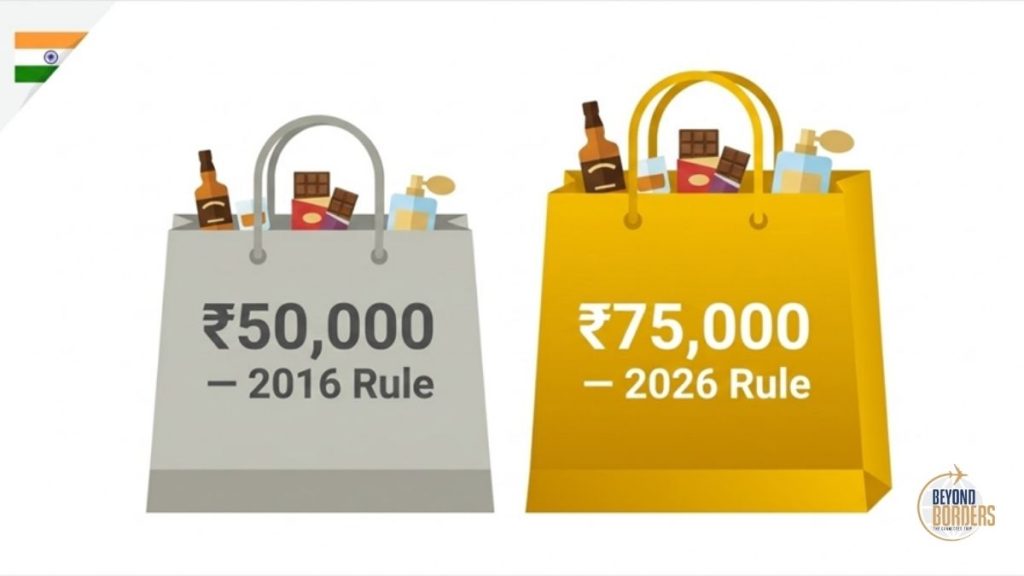
The Indian government has amended the Baggage Rules to raise the inbound India duty free allowance 2026 for Indian residents from Rs 50,000 (approximately USD 555) to Rs 75,000 (approximately USD 833). This change, effective under the Baggage Rules 2026, applies to goods brought back by Indian residents returning from international travel.
The revision represents an additional Rs 25,000 (approximately USD 278) in discretionary spending headroom per passenger. While this might sound like a line item policy update its commercial implications for travel retail — particularly at arrivals — are considerably larger than the headline number suggests.
Other key updates in the India duty free allowance 2026 revision include a move to a weight based framework for jewellery replacing the old value linked restriction and an increase in the foreign tourist allowance from Rs 15,000 (USD 167) to Rs 25,000 (USD 278). Liquor and tobacco quantitative limits remain unchanged.
Related: India UK FTA: What the Deal Means for Duty Free Prices and Airports
2. Why the Old Rs 50,000 Limit Had Become Structurally Outdated Before India Duty Free Allowance 2026
When Rs 50,000 was introduced as the duty free ceiling in 2016 it was commercially reasonable. A premium bottle of spirits could be had for well under Rs 15,000. The allowance gave passengers enough room to buy spirits, chocolates and a fragrance in a single basket without straining the limit.
However four major structural forces eroded the real value of that ceiling over the past decade and made the India duty free allowance 2026 revision inevitable.
Four Forces That Made India Duty Free Allowance 2026 Necessary
Ultra prestige spirits entered the Rs 30,000 and above price band. A single bottle of Macallan 18, Glenfarclas 25 or a limited edition blended Scotch could consume 60 to 70% of the total allowance in one purchase. Global inflation raised luxury retail pricing across all categories from confectionery to fragrances and accessories. Indian international passenger volumes expanded significantly increasing the commercial importance of arrivals retail. Airports transitioned to walk through arrivals retail formats designed to capture a larger share of the inbound basket but structurally limited by the allowance ceiling.
The allowance ceiling remained static while premiumisation accelerated. The result was basket compression: a passenger who made a high value spirit purchase was effectively locked out of meaningful secondary category purchases. The Rs 50,000 rule had become a brake on commercial performance and the India duty free allowance 2026 revision removes that brake.
Related: Indian International Passenger Volumes and Airport Retail Growth
3. Category by Category Impact: Who Wins Most from India Duty Free Allowance 2026?
The India duty free allowance 2026 revision does not benefit all categories equally. The table below maps each category to its impact level and explains what specifically changes under the new rules.
| Category | Impact Level | What the India Duty Free Allowance 2026 Revision Changes |
|---|---|---|
| Liquor | Highest | Quantitative limit unchanged at 2 litres. The entire uplift is value- based enabling ultra prestige SKUs above Rs 30,000 to coexist with secondary category purchases. |
| Chocolates and Confectionery | High | Gifting baskets now structurally viable alongside a high value spirit purchase. Festive and gifting occasions are unlocked at scale. |
| Jewellery | High | Weight based framework reduces valuation disputes at customs. Passenger confidence in jewellery purchases at the India duty free allowance 2026 level increases. |
| Fragrance and Cosmetics | Medium High | Now sits comfortably within remaining headroom after a premium spirit purchase. Cross category bundling becomes commercially viable. |
| Tobacco | Medium | Quantitative limits unchanged. Easier to include within a basket that already contains high value liquor without breaching the allowance. |

Liquor: The Primary Beneficiary of India Duty Free Allowance 2026
Liquor is the category that gains the most from the India duty free allowance 2026 revision. With the quantitative limit held at 2 litres the change is entirely about value and that matters enormously for ultra prestige SKUs. A passenger who previously had to choose between a premium spirit and all other purchases now has Rs 40,000 remaining after a Rs 35,000 bottle. Premiumisation becomes commercially viable at scale.
Chocolates and Confectionery: Gifting Unlocked by India Duty Free Allowance 2026
Chocolates and confectionery sit squarely within the total India duty free allowance 2026 ceiling. Under the old Rs 50,000 rule a passenger who spent heavily on spirits had almost nothing left for gifting categories. The expanded ceiling makes it structurally feasible to include premium confectionery in the same basket as a high value spirit purchase, unlocking the gifting occasion especially during festive periods.
Tobacco: Stable but More Accessible Under India Duty Free Allowance 2026
Tobacco quantitative limits remain unchanged at 100 cigarettes, 25 cigars or 125g tobacco. However at Rs 2,000 to Rs 5,000 for a carton of premium cigarettes tobacco is now more easily included in a basket that already contains a high value spirit without breaching the India duty free allowance 2026 limit. Its relative weight in the basket has decreased which paradoxically makes it easier to buy.
Jewellery: Weight Based Framework Under India Duty Free Allowance 2026
The shift from value linked to weight based restrictions for jewellery reduces valuation friction significantly. Previously declaring and being taxed on the value of jewellery required subjective assessment at customs. A weight based framework is more transparent and is likely to increase passenger confidence in making jewellery purchases under the India duty free allowance 2026 rules.
4. The Ultra Prestige Opportunity: Basket Architecture Unlocked by India Duty Free Allowance 2026
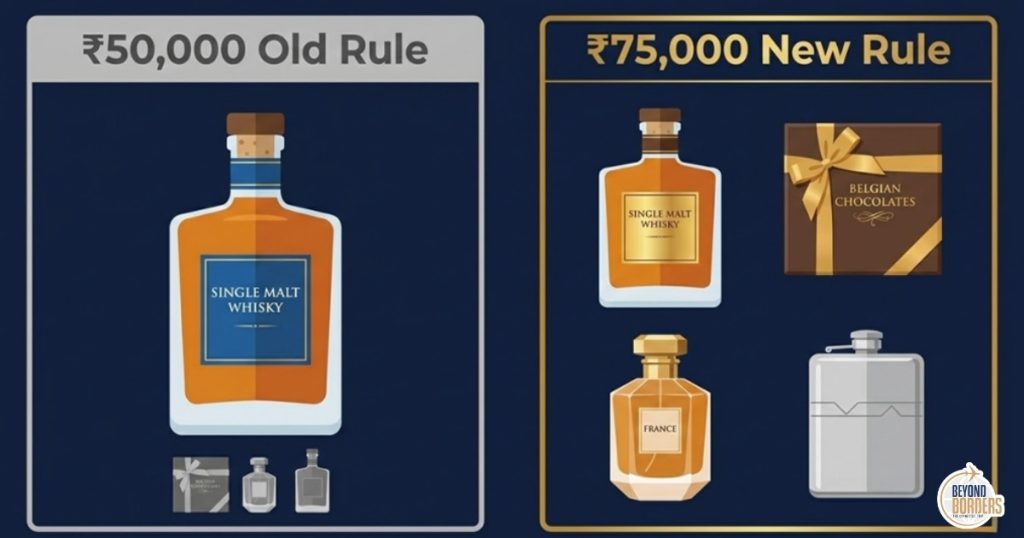
The most commercially significant insight from the India duty free allowance 2026 revision is what it does to basket architecture — not just total value. Under the old Rs 50,000 ceiling a passenger purchasing a single ultra prestige spirit at Rs 35,000 had Rs 15,000 remaining for all other categories. That is barely enough for a mid tier confectionery gift and one fragrance sample.
Under the new India duty free allowance 2026 ceiling of Rs 75,000 the same Rs 35,000 spirit purchase leaves Rs 40,000 in remaining headroom. This transforms what a single shopper can do in a single visit: add a second mid tier spirit bottle at Rs 10,000 to Rs 15,000; include premium confectionery or a gifting box at Rs 3,000 to Rs 8,000; purchase a fragrance at Rs 5,000 to Rs 12,000; add tobacco within limits at Rs 2,000 to Rs 5,000.
This is not just a larger basket. It is a fundamentally different basket. The multi category purchase which was structurally compressed under the old rules is now structurally enabled by the India duty free allowance 2026 revision. For brands selling in arrivals halls this is the single most important commercial development in Indian travel retail in a decade.
Related: Premium Spirits Duty Free Expressions and Brand Strategy in India
5. Revenue Modelling: What India Duty Free Allowance 2026 Means for Indian Airports
To understand the commercial scale of the India duty free allowance 2026 revision consider a conservative illustration for a single major Indian international airport. This modelling is illustrative and based on reasonable industry assumptions.
| Assumption | Value |
|---|---|
| International arriving passengers annually | 3 million |
| Duty free conversion rate | 20% (600,000 buyers) |
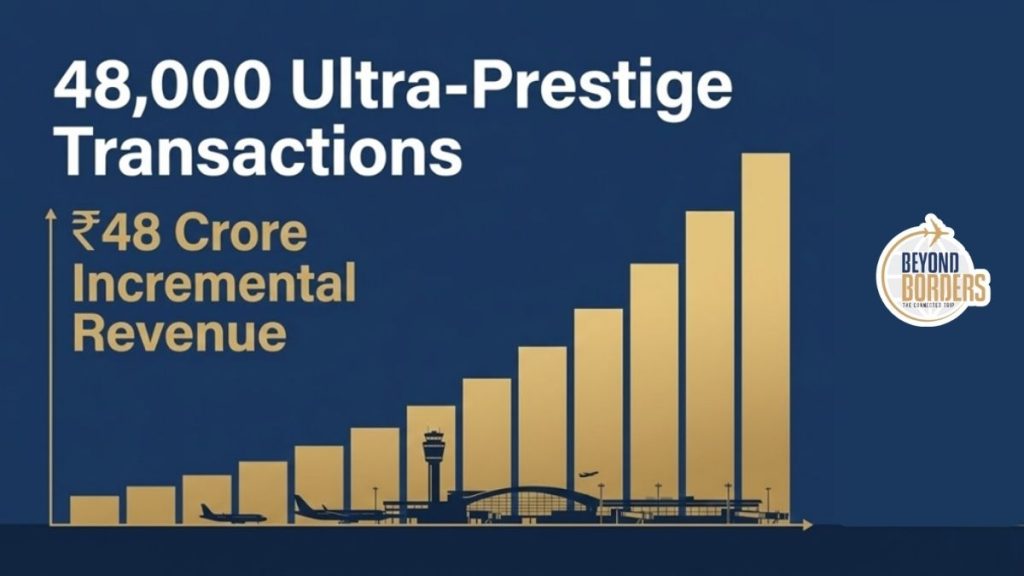
| Purchasing ultra prestige SKU above Rs 30,000 | 8% (48,000 transactions) |
| Incremental secondary purchase per buyer | Rs 10,000 (conservative) |
| Incremental arrivals revenue at single airport | Rs 48 crore (approx USD 5.3 million) |
| Aggregate across 5 to 6 major gateways | Rs 250 to 300 crore potential |
If the expanded India duty free allowance 2026 enables even a Rs 10,000 incremental secondary purchase per ultra prestige buyer — a conservative estimate given the Rs 40,000 remaining headroom — the additional value generated is: 48,000 transactions multiplied by Rs 10,000 equals Rs 480,000,000 — approximately Rs 48 crore (USD 5.3 million) in incremental arrivals revenue at a single airport.
Scale this across five or six major international gateways in India and the aggregate commercial opportunity is material — likely exceeding Rs 250 to 300 crore in basket expansion value across the network if category strategies are aligned to capture it.
6. Strategic Implications for Brands and Retail Teams Under India
Duty Free Allowance 2026
The India duty free allowance 2026 revision creates a clear commercial opportunity but it does not automatically convert into revenue. The uplift will only be captured if airport operators and brand teams actively align their assortment, pricing and promotional strategies to the new Rs 75,000 reality.
For Airport Operators and Concessionaires
The key questions now are whether the spirits range is offering genuine ultra prestige options above Rs 30,000 with prominent placement in arrivals. Whether cross category bundling promotions such as spirits combined with confectionery or spirits combined with fragrance are available at point of sale. Whether digital and physical signage is communicating the India duty free allowance 2026 ceiling clearly to arriving passengers. Whether traveller facing communications on airline apps, airport websites and boarding gate screens have been updated to reflect the new Rs 75,000 limit.
For Luxury and Prestige Spirits Brands
The India duty free allowance 2026 is an inflection point for luxury spirits. The commercial logic for expanding India arrivals listings and investing in dedicated duty free expressions has materially improved. Brands that move quickly to position ultra prestige SKUs within the new headroom will capture first mover advantage in a structurally more favourable market. For a broader perspective on how duty free regulations shape global travel retail strategy the International Association of Airport Duty Free Stores (IAADFS) publishes detailed category intelligence that brands and operators can reference when building India specific plans.
External Reference: IAADFS: International Association of Airport Duty Free Stores
7. Comparison Table: India Baggage Rules 2016 vs India Duty Free
Allowance 2026
The table below provides a direct comparison of the old and new rules across every commercially relevant category. Use this as a reference when briefing buying and commercial teams on the India duty free allowance 2026 opportunity.
| Category | 2016 Rule | 2026 Rule | Commercial Impact |
|---|---|---|---|
| Total Duty Free Value (Residents) | Rs 50,000 (approx USD 555) | Rs 75,000 (approx USD 833) | +50% basket potential per passenger |
| Liquor | Up to 2 litres | Up to 2 litres | Volume stable; premiumisation opportunity |
| Tobacco | 100 cigarettes, 25 cigars or 125g | Unchanged | Easier to include alongside high value liquor |
| Chocolates and Confectionery | Within Rs 50,000 ceiling | Within Rs 75,000 ceiling | Larger gifting baskets now viable |
| Jewellery | Value linked restrictions | Weight based framework | Reduced valuation friction at customs |
| Foreign Tourist Allowance | Rs 15,000 (approx USD 167) | Rs 25,000 (approx USD 278) | +67% increase for inbound tourists |
8. Frequently Asked Questions About India Duty Free Allowance 2026
What is India’s new duty free allowance in 2026?
Under the Baggage Rules 2026 the India duty free allowance 2026 for Indian residents returning from international travel is Rs 75,000 (approximately USD 833). This is a 50% increase from the previous Rs 50,000 (approximately USD 555) limit that had been in place since the 2016 rules were introduced.
When does the India duty free allowance 2026 of Rs 75,000 come into effect?
The revised India duty free allowance 2026 is effective under the Baggage Rules 2026. Passengers should confirm the exact enforcement date with the Central Board of Indirect Taxes and Customs (CBIC) or their airline as implementation timelines for baggage rule amendments can vary by notification date.
How much alcohol can I bring to India duty free in 2026?
The liquor quantitative limit remains unchanged at 2 litres per adult passenger under the India duty free allowance 2026 rules. However the increased total allowance of Rs 75,000 means passengers can now allocate more of their budget to a higher value spirit bottle without sacrificing other purchases. A prestige bottle at Rs 35,000 now leaves Rs 40,000 for other categories compared to only Rs 15,000 under the old rule.
Does the India duty free allowance 2026 apply to jewellery purchases?
Yes jewellery falls within the general India duty free allowance 2026 but its treatment has changed from a value based to a weight based framework. This reduces valuation disputes at customs and makes duty free jewellery purchases more straightforward for returning travellers.
What happens if I exceed the India duty free allowance 2026 of Rs 75,000?
Goods above the India duty free allowance 2026 threshold are subject to customs duties. The applicable duty rate varies by product category. Passengers must declare excess goods at the red channel upon arrival. Undeclared goods above the limit may be subject to confiscation and penalties under Indian customs law.
Does the India duty free allowance 2026 apply to NRIs and foreign tourists?
The Rs 75,000 allowance applies to Indian residents returning from abroad. A separate allowance for foreign tourists has also been revised upward from Rs 15,000 to Rs 25,000 under the India duty free allowance 2026 rules. NRI allowances may be governed by separate provisions and travellers should verify their specific entitlement with CBIC.
Why is the India duty free allowance 2026 change commercially significant for retailers?
The India duty free allowance 2026 revision unlocks what industry analysts call basket architecture — the ability for a passenger to combine a high value spirits purchase with secondary categories like confectionery, fragrances and accessories in a single trip. Under the old limit buying one prestige spirit left almost no room for anything else. The new ceiling changes that fundamentally with modelling suggesting Rs 48 crore in incremental basket value at a single major airport.
What should brands and airports do to capture the India duty free allowance 2026 opportunity?
Brands and airport operators should immediately review arrivals assortments to ensure ultra prestige SKUs above Rs 30,000 are available and prominently placed. Cross category promotional bundles such as spirits combined with confectionery or spirits combined with fragrance should be prioritised at point of sale. Passenger facing communications including signage, digital boards and airline apps should be updated to clearly communicate the India duty free allowance 2026 of Rs 75,000 so travellers are aware of their expanded headroom before they reach the arrivals retail floor.
9. Conclusion: India Duty Free Allowance 2026 Has Moved the Ceiling
The India duty free allowance 2026 is not a minor administrative update. It is the most commercially significant change to inbound travel retail rules in nearly a decade and it arrives at precisely the moment when Indian international passenger volumes and premiumisation appetite are at their highest.
For travellers the message is simple: you now have Rs 25,000 more to spend on your next return journey. For airports, concessionaires and luxury brands the message is more urgent: the structural constraint that compressed the arrivals basket for ten years has been removed by the India duty free allowance 2026 revision. The question is whether assortments, promotions, pricing and passenger communications are positioned to capture the full value of the new ceiling.
In duty free retail ceilings define ambition. The India duty free allowance 2026 ceiling has moved. The brands and airports that respond fastest will own the new headroom.

Disclaimer: The analysis, opinions and projections expressed in this article are based on publicly available information and research. They are not intended as professional, legal or policy advice.